
HVAC is a business of extremes. When the first heatwave hits, your phone does not stop ringing; in the shoulder seasons, it barely rings at all. That feast-or-famine cycle is what makes HVAC marketing distinct — the winners smooth it out by owning the emergency searches during the spikes and, crucially, building a base of maintenance-plan customers who generate revenue all year round. This is the complete marketing playbook for HVAC companies, built around capturing seasonal demand and converting it into recurring income.
The companies that win in HVAC are the ones that stop treating the business as a series of disconnected jobs and start treating it as a system. A repair is a chance to earn a maintenance plan; a maintenance visit is a chance to catch a failing system before it dies; a plan member is a guaranteed call when it is finally time to replace. Marketing, done right, is not just about ringing phones in July — it is about building a base of trusting customers who generate revenue in every month of the year, whatever the weather does.
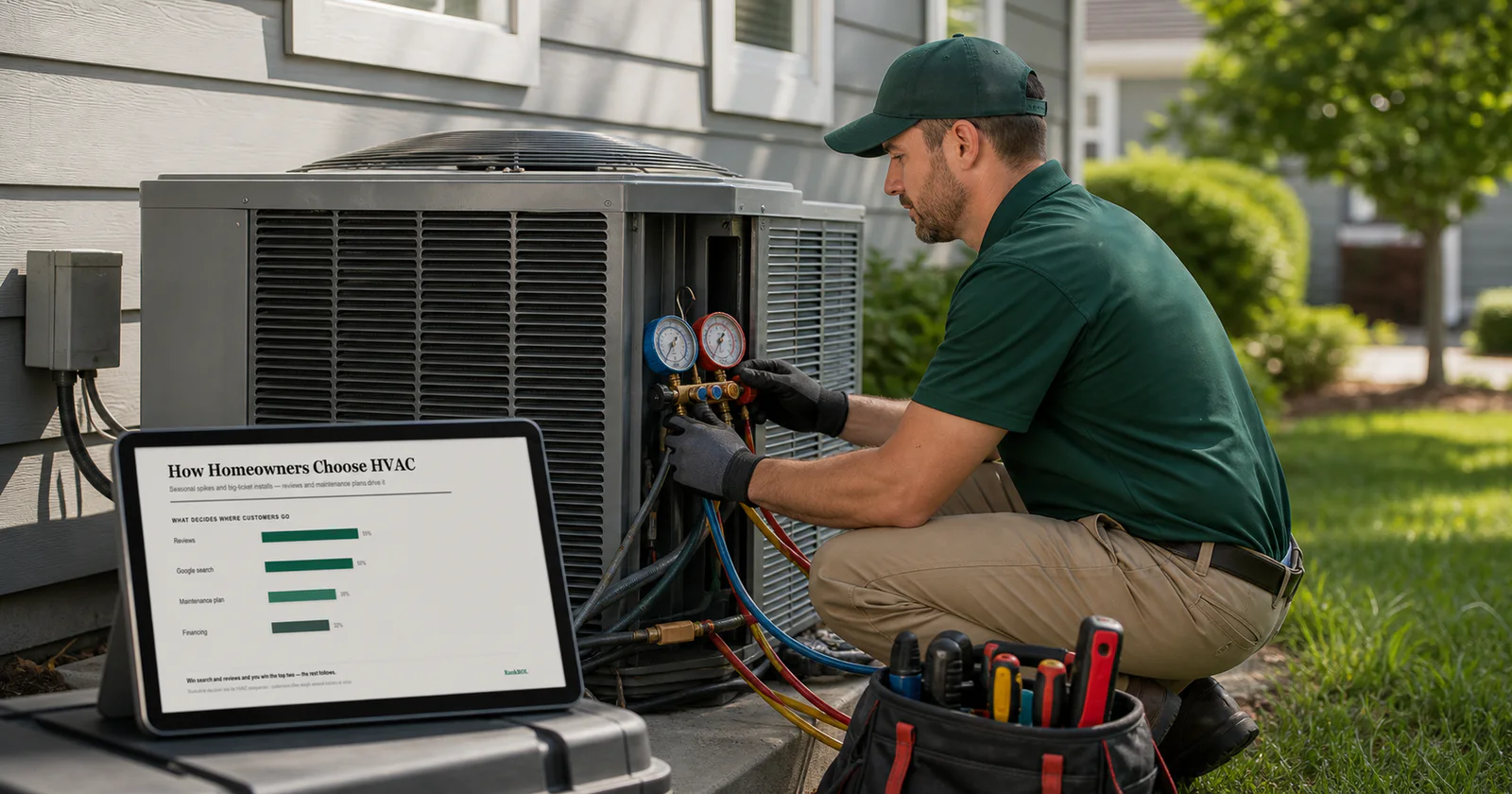
How homeowners actually choose HVAC
HVAC decisions split between urgent repairs and planned installs, but both lean on trust and findability. Here is the mix that decides who wins.
- Availability: fast, credible help matters most when heating or cooling fails.
- Trust: licensing, reviews and plain-language options make a costly recommendation easier to accept.
- Long-term value: maintenance plans, financing clarity and reliable follow-up influence planned replacements.
Own the seasonal emergency search
When the AC dies in July, homeowners search "AC repair near me" and call fast. Owning the Google Maps pack during those spikes captures a flood of well-paid work — and many repairs become replacements. Ranking there comes down to relevance, distance and prominence, covered in why your business does not show up on Google Maps. Build separate pages for repair, installation and maintenance so each ranks for its own searches and speaks to that homeowner's situation.
Prepare before the season, not during it. Rankings and reviews take time to build, so the work you do in spring is what puts you in the map pack when the summer rush hits. Companies that wait until the phones are ringing to think about marketing have already lost that season.
Reviews close the big install
A new HVAC system is thousands of dollars, so the planned-replacement customer researches hard. A company with 150 recent reviews describing clean, on-time installs wins over a cheaper unknown when other factors align. Ask every customer for a review at job completion, and reply to all of them — the review response playbook shows how to turn even a difficult one into reassurance. Show your licensing and certifications clearly; this is E-E-A-T for a high-ticket trade, as covered in E-E-A-T is a business asset.
The money mechanic: maintenance plans beat the season
The potentially high-value powerful thing an HVAC company can do is build a base of maintenance-plan members. Plans generate revenue in the quiet months, guarantee repeat visits, and make each customer far more valuable.
Offer a plan to every customer after a repair or install, and make financing on new systems obvious — it removes the cost barrier that stalls big decisions. Your website should make booking a service or requesting an install quote effortless and answer the cost, timeline and financing questions up front, the same principle as the 7 questions customers ask before buying.
What most HVAC companies get wrong
The classic HVAC mistake is only thinking about marketing when the phones are already ringing. By the time the first heatwave hits and you decide you want more calls, it is too late — rankings, reviews and reputation take weeks and months to build, so the companies that dominate July did the work in April. Marketing is a spring investment that pays out in summer, and treating it as an emergency you address mid-season means you spend every peak watching better-prepared competitors capture the demand you could have owned.
The second mistake is leaving money on the table by never offering maintenance plans. Every install and every repair is a chance to convert a customer into a member who pays year-round, calls you first, and books two tune-ups a year — yet many companies simply complete the job and move on. Without a plan base, you are permanently at the mercy of the season, scrambling for one-off work in the quiet months instead of collecting predictable recurring revenue from customers who already trust you.
The customer who calls you for an emergency repair in a heatwave is your warmest possible lead for a full system replacement and a maintenance plan. Handle that stressful call brilliantly and you do not just fix a unit — you earn a customer who upgrades, subscribes, and refers. Treat emergencies as the front door to a long relationship.
The HVAC visibility checklist
- Build pages per service — repair, installation, maintenance — each ranking for its searches.
- Complete your Google Business Profile with service areas and emergency availability.
- Prepare before the season so your rankings and reviews peak when demand does.
- Ask for a review at every completion and reply to all of them.
- Offer a maintenance plan to every customer to smooth revenue across the year.
- Make financing obvious so the big install becomes an easy yes.
HVAC rewards the company that captures the spike and builds a base that carries it through the quiet months. Own the seasonal search, earn the reviews that close big installs, and turn customers into plan members. If you would rather have that system built for you, that is exactly what a free growth audit is designed to map out.



Reader discussion
No approved comments yet.