
An empty chair earns nothing. You can be the most talented stylist in town, but if new clients cannot find you — or find you and book someone else — the talent never gets a chance. The good news is that filling a salon in 2026 is not about luck or a bigger ad budget; it is about being visible in the handful of places clients actually look, and giving them no reason to scroll past. This is the complete marketing playbook for salons, tailored to how people really choose where to get their hair, nails or lashes done.
Where salon clients actually look now
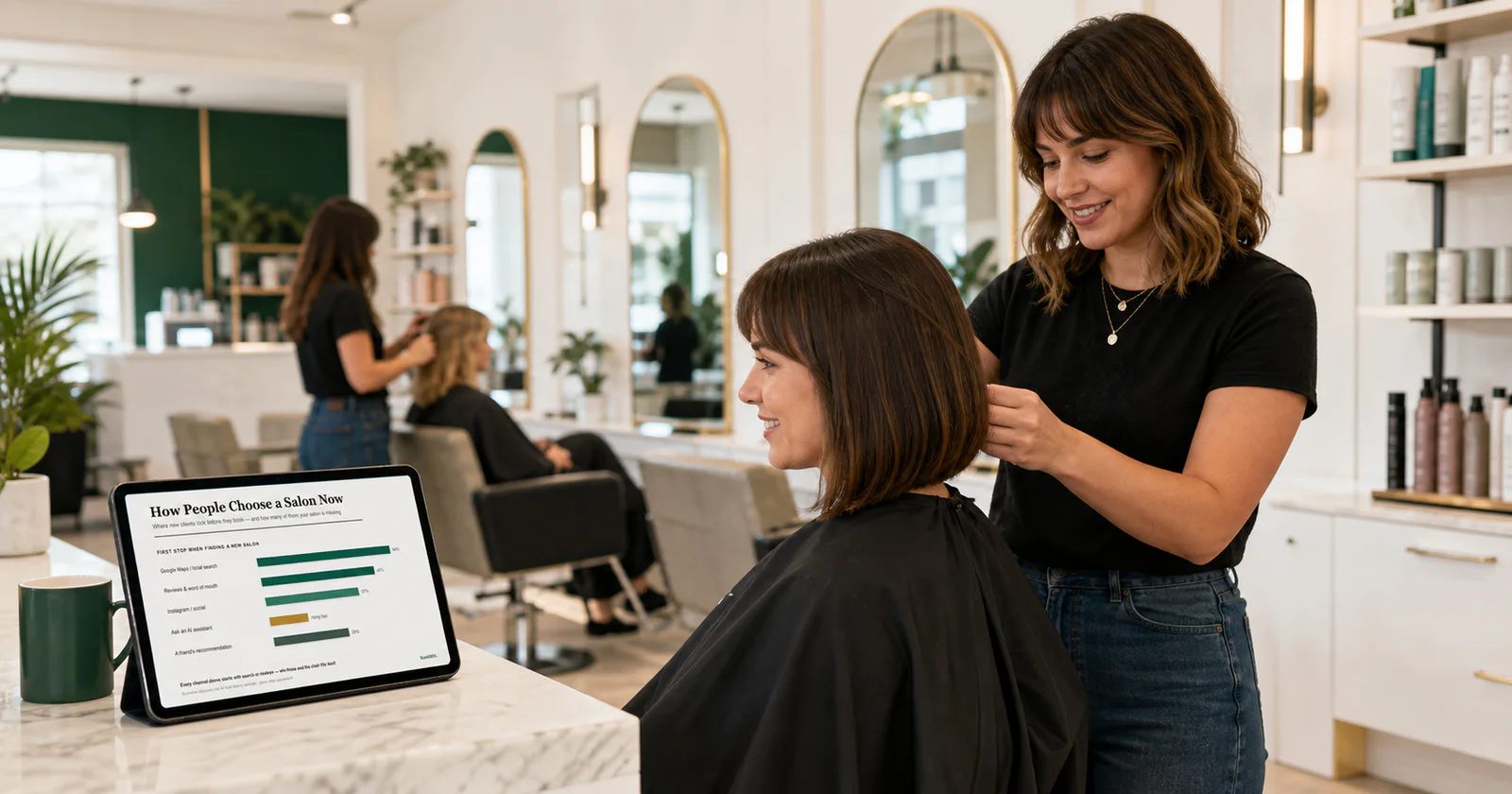
Before anyone sits in your chair, they run a quick, predictable research loop on their phone. Understanding it tells you exactly where your marketing effort belongs — and where it is wasted.
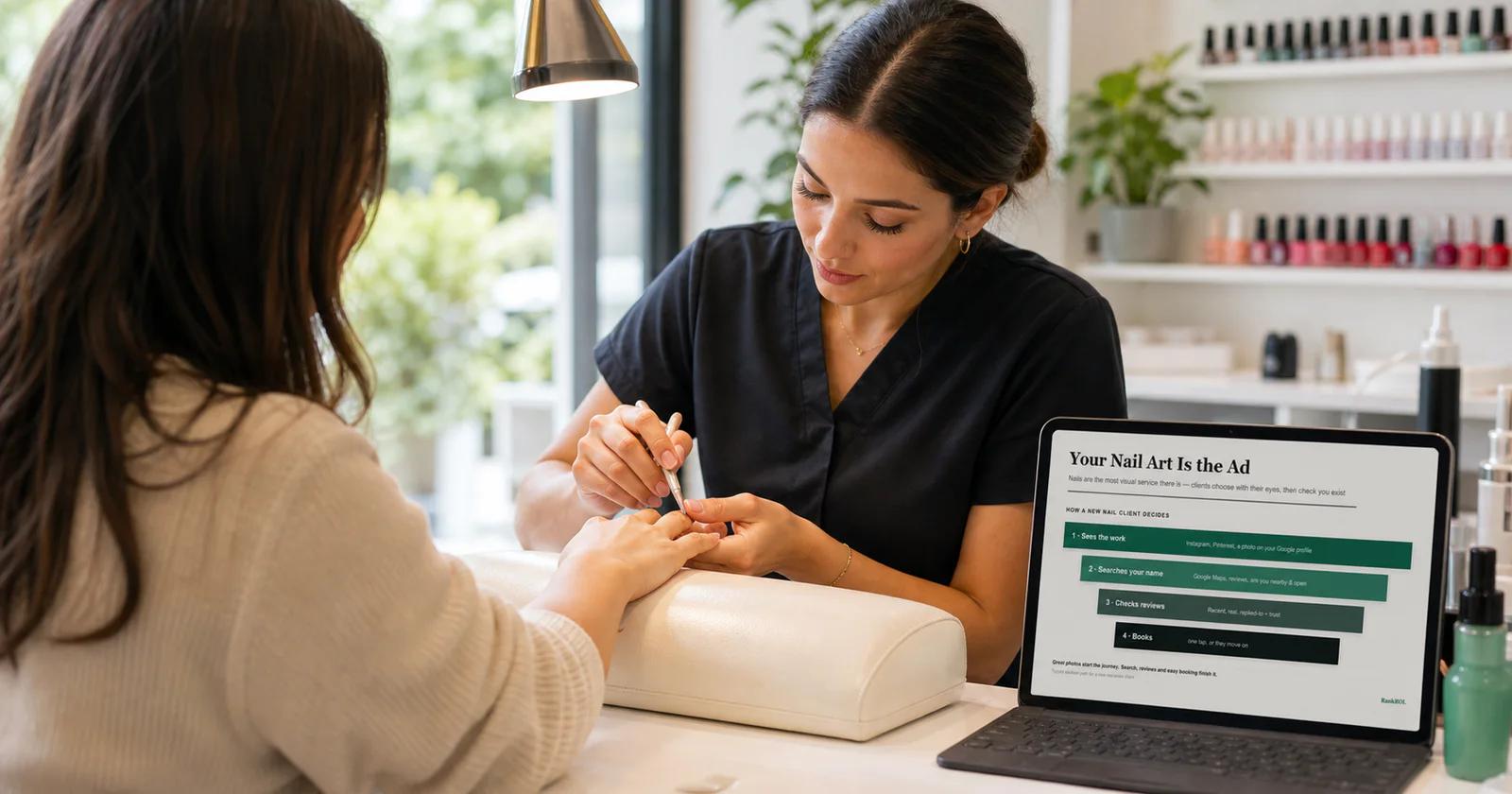
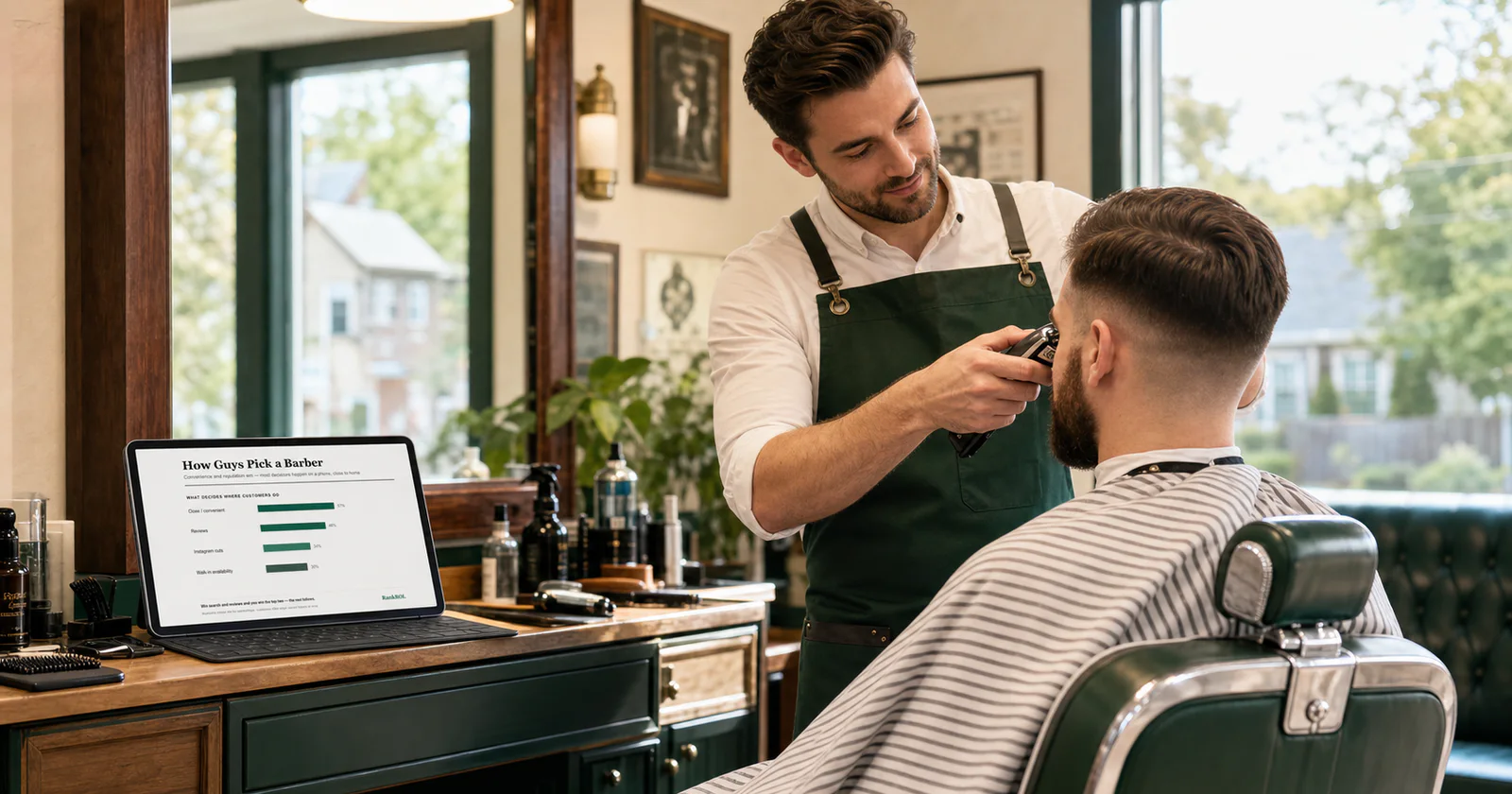
Notice that the top two are search and reviews, and even an Instagram or word-of-mouth referral usually ends with the client googling your name to check you out. Get search and reviews right and every other channel works harder for you.
Own the map pack — this is where the bookings are
When someone searches "hair salon near me" or "gel nails [your town]," Google shows three businesses in a map at the very top. Those three get the calls. If your salon is not one of them, you are invisible to the exact people ready to book today. The three signals that decide who appears are relevance, distance and prominence — and most salons lose on prominence simply because they have not gathered enough recent reviews or kept their details consistent. We break the whole diagnostic down in why your business does not show up on Google Maps; for a salon, the fastest wins are setting your primary category precisely (hair salon, nail salon, lash bar — not just "beauty salon") and listing every service by the name clients search.
Add each service as its own entry on your Google Business Profile — "balayage," "gel extensions," "keratin treatment" — using the exact words clients type. Google can only match you to searches it understands, and specific service names are how new clients find the treatment they want.
Reviews are your real storefront
For a salon, reviews are everything. Nobody trusts their hair or nails to a stranger with three reviews when the salon down the road has two hundred. Reviews drive your map ranking and they are the deciding factor once a client finds you. The salons that win treat review-gathering as part of the service: a friendly ask after the visit through a neutral, non-pressured follow-up while the client is admiring the result, and a direct link that makes leaving one take ten seconds. And when a less-than-perfect review lands — it happens to everyone — how you respond is read by every future client. Our review response playbook shows the four-part reply that turns a critic into proof you care.
Your website has one job: get the booking
A salon website does not need to be a work of art. It needs to answer the client's questions and make booking effortless. Too many salon sites hide their prices, bury the booking button, and make a ready-to-book client hunt for what they need — so the client gives up and books elsewhere. Every service page should answer the questions a client asks before booking: what does it cost, how long does it take, who will do it, and how do I book right now. This is the same conversion principle in the 7 questions customers ask before buying and why websites get traffic but no customers — applied to a chair that needs filling.
Speed matters more than salon owners think — nearly all of this traffic is on a phone, and a slow-loading gallery of high-resolution photos sends clients away before they ever see your work. If your site crawls on mobile, the five fixes in the website speed guide apply directly.
Turn one-time visits into a full book
Filling chairs is only half the battle; keeping them full is where salons get profitable. Two numbers quietly decide a salon's income: rebooking rate and no-shows. Capture every new client's details, send a friendly reminder before the appointment to cut no-shows, and prompt a rebooking before they leave the chair. A simple email or text list of past clients is the most valuable marketing asset a salon owns — it costs nothing to message people who already love your work, and a slow week is a great time to fill.
Model rebooking from the salon's own baseline, capacity, retention, and service margin, then compare the incremental contribution with paid acquisition. Systems for rebooking and reminders pay for themselves faster than almost anything else.
The 7-day salon visibility checklist
- Day 1: Claim and complete your Google Business Profile — precise category, every service listed, real photos of your work.
- Day 2: Set up a one-tap review link and start asking every eligible client after the visit through a neutral, non-pressured follow-up.
- Day 3: Add prices (or ranges) and an always-visible "Book Now" button to your website.
- Day 4: Test your site on a phone — if it is slow, compress those gallery photos.
- Day 5: Make sure your name, address and phone match exactly across your site, Google, and Instagram.
- Day 6: Start capturing client contact details and set up appointment reminders.
- Day 7: Search "best [your service] near me" from a phone in your area and see where you stand.
You did not train for years to sit next to an empty chair. The clients are out there searching right now — the only question is whether they find you or the salon down the street. Get visible where they look, make booking effortless, and keep the clients you earn, and the chair fills itself. If you would rather have it done for you, that is exactly the kind of work a free growth audit is built to map out.

Reader discussion
No approved comments yet.