
Landscaping is a business you can photograph — and that is your biggest marketing advantage. A stunning before-and-after of a transformed garden sells more than any sales pitch, because homeowners buy with their eyes. But the real prize in landscaping is not the one-off project; it is the recurring maintenance contract that pays every month whether it is sunny or not. The landscapers who build a real business win on two fronts: a portfolio that turns browsers into project leads, and a maintenance base that turns those projects into steady income. This is the complete marketing playbook for landscaping companies.
Landscaping has an advantage most trades would envy: your work is genuinely beautiful, and beauty is shareable. A transformed garden is the kind of thing people photograph, show their neighbours, and admire from the street — which means your eligible customers and your finished projects are constantly, quietly marketing you if you let them. The whole game is making that natural visibility work harder: capturing the transformations, getting them in front of people searching, and turning the one-off wow of an install into an ongoing relationship that keeps the garden — and your revenue — looking good all year.
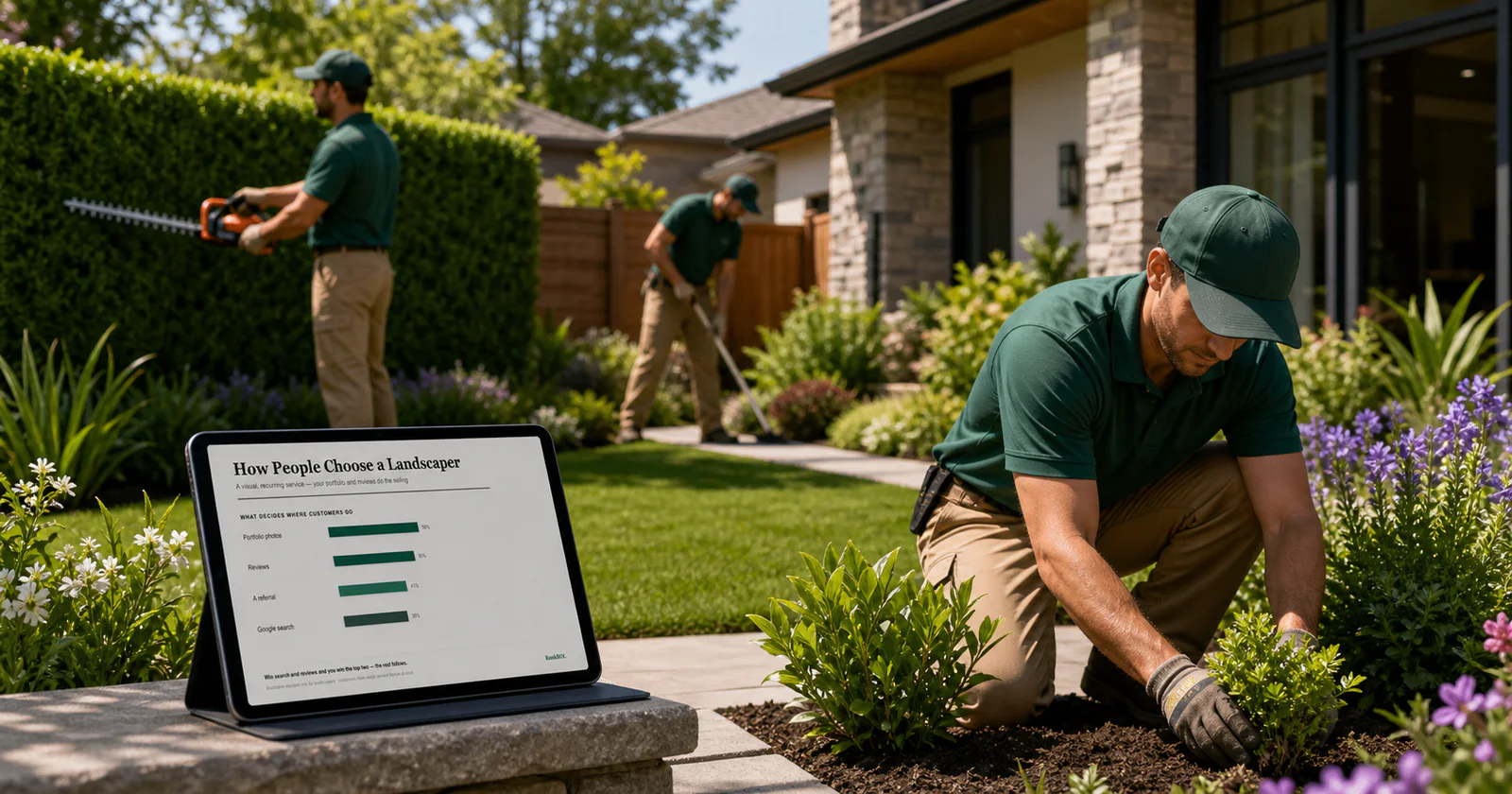
How people actually choose a landscaper
Landscaping is visual and reference-driven. Homeowners want to see what you can do and hear that others were happy. Here is the mix that decides who wins the job.
- Visual proof: local before-and-after projects help homeowners picture the result.
- Reputation: reviews and referrals reduce the risk of inviting a crew onto the property.
- Fit and follow-through: a clear quote, responsive communication and maintenance options close the job.
Your portfolio is the pitch
Photograph every job — before, during and after — and build a gallery organized by type: garden design, patios and decking, lawn care, planting. Homeowners scroll these to picture their own space transformed, and detailed project pages rank for searches like "garden landscaping [city]." A landscaper with a rich, local portfolio wins the project over one with a bare website, because the work speaks for itself. This is the "show your work" principle behind E-E-A-T as a business asset.
Shoot your best transformations in good light and post them everywhere — your website gallery, your Google Business Profile, and social. A single dramatic before-and-after is the most persuasive marketing a landscaper owns, and it costs nothing but the moment it takes to photograph.
Get found when the project starts as a search
Many jobs begin with "landscaper near me" or "patio installer [town]." Ranking in the Google Maps pack and local results puts you in front of homeowners with a live project. Getting there comes down to relevance, distance and prominence — the diagnostic is in why your business does not show up on Google Maps.
Reviews close the deal
A landscaper with 90 detailed reviews describing tidy, on-time, on-budget work wins over an unknown quote. Ask for a review at project completion, when the garden looks its best and the client is delighted, and reply to all of them. The review response playbook shows how to handle the occasional difficult one.
The money mechanic: recurring maintenance contracts
Project work is lumpy and seasonal; maintenance contracts are steady and predictable. The landscapers who build a real business turn every project into an ongoing relationship.
After every install, offer a maintenance package — the client already trusts you, the garden needs upkeep, and it converts a one-off into monthly revenue. Your website should make requesting a quote effortless and answer the questions a homeowner has about process, timeline and cost, the same principle as the 7 questions customers ask before buying.
What most landscapers get wrong
The biggest missed opportunity in landscaping is doing beautiful, photogenic work and never photographing it properly. You transform a garden — the potentially high-value persuasive marketing asset you could possibly create — and then move on to the next job without capturing it, or you snap one dark phone photo that does the work no justice. Your competitors who take five minutes to shoot a clean before-and-after in good light are building a portfolio that wins jobs and ranks in search for years, while your best work exists only in the memory of one eligible client.
The second mistake is chasing one-off projects and never offering maintenance. A landscaper who only does installs is on a permanent treadmill, starting every month from zero and living at the mercy of the seasons. The one who offers a maintenance package on every project builds a base of recurring monthly revenue, keeps the client relationship alive, and gets first call for the next big project — all from work they were already trusted to do.
A maintained garden is a standing advertisement. Every property you keep looking immaculate is seen by neighbours, dog-walkers and passers-by, and a small, discreet sign turns that visibility into enquiries. Your recurring maintenance work markets your project work for free, all year round.
The landscaping visibility checklist
- Photograph every job and build a gallery organized by project type.
- Complete your Google Business Profile with service areas and portfolio photos.
- Ask for a review at completion when the garden looks its best, and reply to all.
- Make requesting a quote effortless and answer process and cost questions.
- Offer maintenance on every project to build recurring income.
- Post your best before-and-afters everywhere — they are your strongest ad.
Landscaping sells itself when people can see the work — so make your transformations impossible to miss, get found when a project starts as a search, and turn every install into an ongoing contract. If you would rather have that built for you, that is exactly what a free growth audit is designed to map out.



Reader discussion
No approved comments yet.