
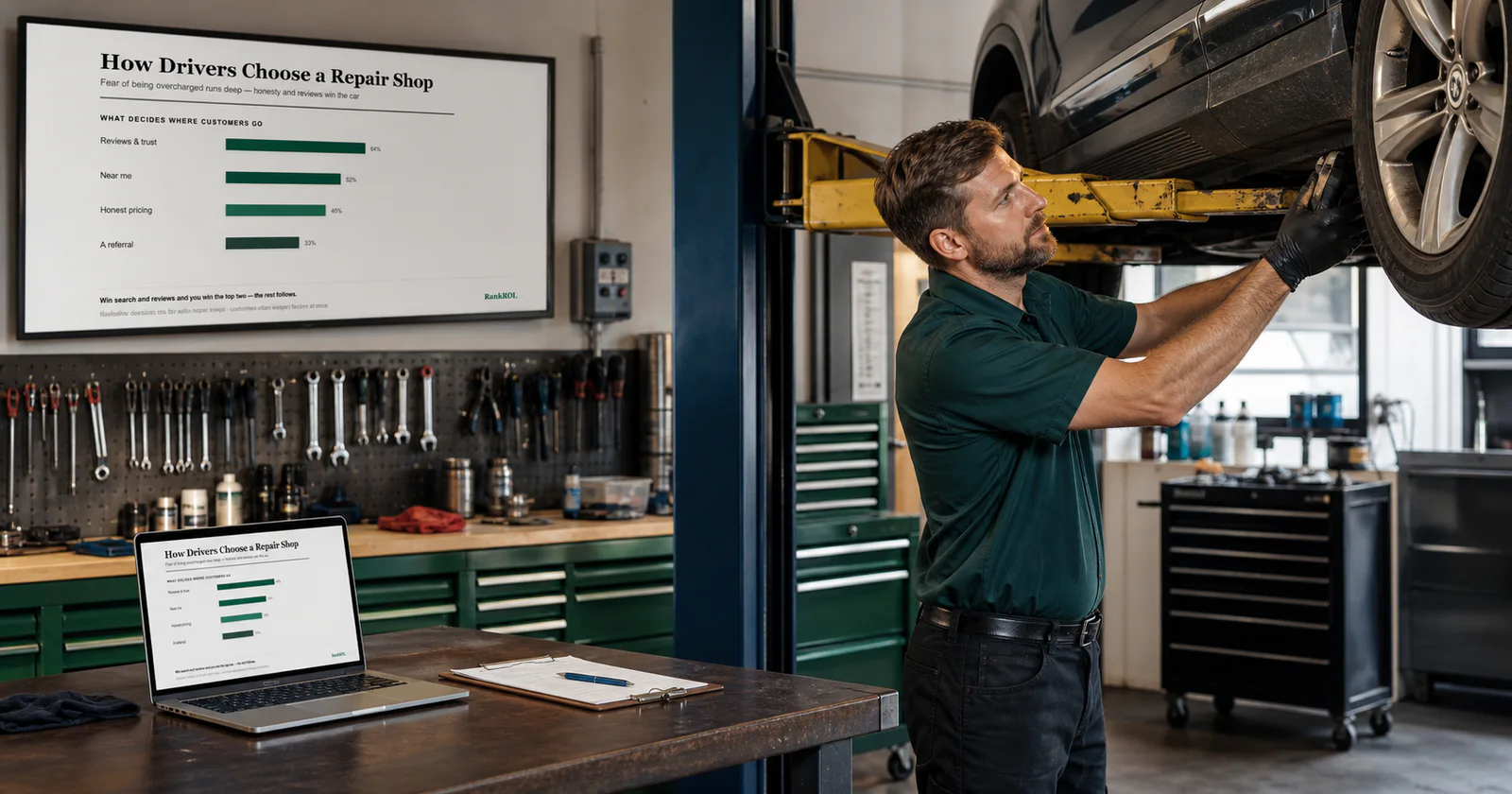
Every auto repair shop fights the same invisible enemy: the customer's fear of being ripped off. People do not understand what is wrong with their car, they suspect every mechanic of inventing problems, and they choose a shop the way they choose a surgeon — on trust, referral and reputation. Win that trust and you earn a customer who returns for years and sends their family; lose it and no amount of advertising helps. The shops that thrive have built visible, verifiable trust and made themselves the obvious "near me" choice. This is the complete marketing playbook for auto repair shops.
How drivers actually choose a shop
The auto repair decision is driven by trust and proximity — people want an honest shop that is convenient. Here is the mix that decides who gets the car.
- Visible trust: clear explanations, inspection photos and transparent recommendations reduce the fear of being overcharged.
- Local convenience: accurate hours, services and proximity determine who makes the shortlist in an urgent search.
- Reputation: recent reviews and a simple booking path turn that shortlist into a first visit.
Make honesty your visible brand
In an industry where customers expect to be cheated, being visibly honest is a superpower. Transparent pricing, clear explanations, photos of the actual problem, and no-pressure recommendations turn a suspicious first-timer into a loyal regular. Put that approach front and centre — it is exactly the trust signal that converts, and it doubles as the E-E-A-T Google's systems may recognize when supported by relevant signals. See E-E-A-T is a business asset.
Show customers the problem — a photo of the worn brake pad, the leaking hose — before you fix it. Shops that make repairs visual and explain them plainly build the trust that turns one nervous visit into a decade of loyalty and referrals.
Own "mechanic near me"
When a warning light comes on or a car starts making a noise, people search "mechanic near me" or "brake repair [town]" and choose from the map pack. Being in that top three captures drivers with an immediate need. Ranking there comes down to relevance, distance and prominence — the diagnostic is in why your business does not show up on Google Maps.
Reviews overcome the trust barrier
Reviews are how a shop proves it is honest before the customer risks a visit. A shop with 300 reviews praising fair pricing and no upselling wins over an unknown when other factors align. Ask every customer for a review when they pick up the car satisfied, and reply to all of them — thoughtful responses to the occasional complaint reassure the wary far more than a wall of unbroken five stars. The review response playbook shows how.
The money mechanic: turn one repair into a lifelong customer
A car needs servicing for its whole life, so a customer who trusts you is worth years of repeat work and referrals. The shops that thrive maximize that lifetime, not just the first invoice.
Capture every customer and their vehicle, and send a reminder when a service is due — it earns the next visit and keeps you top of mind. Your website should answer the pricing, trust and convenience questions up front, the same principle as the 7 questions customers ask before buying, and if it is slow on a phone you lose the driver searching by the roadside, as covered in the speed guide.
What most repair shops get wrong
The biggest mistake is assuming your work speaks for itself. It does not — not because it is not good, but because the customer cannot judge it. They do not know whether the repair was necessary or fairly priced, so they judge you on everything around the work: how clearly you explained it, whether you showed them the problem, how the reviews read. Shops that do excellent mechanical work but treat communication as an afterthought lose to shops that are merely competent but visibly, obviously honest. In a low-trust industry, transparency is the product.
The second mistake is letting customers vanish after a repair. A car is a relationship that lasts years and many services, yet most shops never capture the customer or vehicle, so when the next problem arises the driver starts a fresh search and may never find their way back. The shops that thrive keep a record of every car, send a friendly reminder when a service is due, and turn one repair into a decade of loyalty — while their competitors keep paying to acquire the same customers over and over.
The fear of being overcharged is so strong that simply removing it becomes your entire marketing message. A shop known for never upselling, always explaining, and showing the worn part before replacing it does not need clever advertising — that reputation, captured in reviews, brings a steady stream of drivers who are relieved to have finally found a mechanic they can trust.
The auto repair visibility checklist
- Make honesty visible — transparent pricing, photos of the problem, plain explanations.
- Complete your Google Business Profile with services, hours and location.
- Ask every eligible customer for a review and reply to all of them.
- Capture every customer and vehicle for service reminders.
- Send reminders when service is due to earn the repeat visit.
- Test your site on a phone — roadside searchers need it fast.
In auto repair, trust is an important part of the decision — win it visibly and you earn a customer for the life of their car and the next one. Be the honest shop that is easy to find and easy to trust, and the referrals compound. If you would rather have that built for you, that is exactly what a free growth audit is designed to map out.

Reader discussion
No approved comments yet.